

Beef
I was six, and no one knew I was watching

Six men. One buffalo. A rope.
I am six years old, and no one knows I am watching.
I have found a gap by the wall, far enough that the adults have forgotten I exist, close enough to see everything. It is the day before my uncle’s wedding. The house behind me is all noise and cooking and arrangement. And here, in the yard, six grown men are holding down an animal that does not want to die.
It knows. You can tell it knows.
They tie it. They steady it. For one moment everything goes still, the men, the rope, the animal, the moaning.
Then the blade.
The blood comes, and the cry comes, and to this day I cannot tell you which arrived first. Maybe they were the same thing. Maybe a body that large cannot bleed quietly.
Then chop. Chop. Chop.
And nobody knows the child by the wall has seen all of it.
The next day, the animal appeared as steaming hot traditional beef roast on all our plates.
I have loved that dish my whole life. But I remember my plate that first time. The deep red of the roast, the steam coming off it, the smell of the spices, impossible to resist. And somewhere behind my ears, still, the cry from the yard.
Everyone around me was eating with so much joy.
I was six years old, and I had already learned the most useful skill of my adult life: how to enjoy something thoroughly while refusing to think about where it came from. I wanted to please my palate. My conscience wanted something else. I shut my ears, somewhere deep inside, ate the splendid blend of spices in the red meat, and pretended I had heard nothing at all.
I have been making that same choice ever since. I have only gotten better at it.
Here is what I understood much later. Nobody in that yard was troubled. The animal was held, killed, mourned for about as long as it takes to say a prayer, and then eaten with real pleasure. This was not cruelty. Those people were not cruel. They were honest. They knew exactly what it costs to put meat on a wedding feast, and they did not look away from the cost, and they did not apologize for it.
They did not need to shut their ears. I did. Even at six, I did. They had made their peace with the arrangement. I just learned to fake mine.
And then there is the woman writing this.
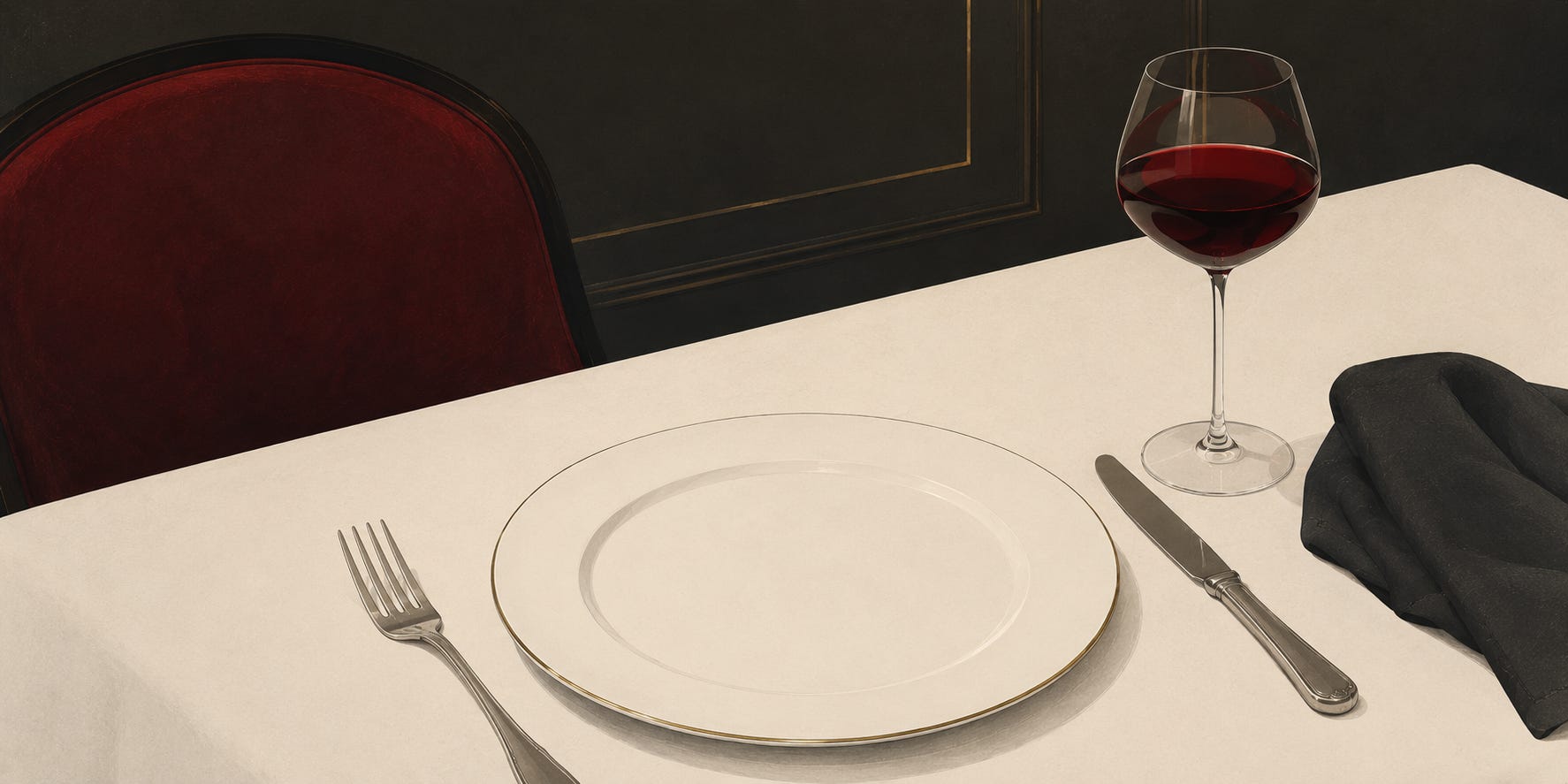
Bangalore. A kitchen with a stone counter, very tasteful, very calm, a kitchen that has never once heard an animal object to its own death. I drink good coffee and I can tell you why it is good. I drink dry red wine and I have opinions about it. And on the nights I cannot be bothered with any of it, dinner simply arrives at my door through an app, having travelled some distance I will never think about, from a kitchen I will never see, prepared by hands I will never meet. The modern miracle. The cry, fully outsourced. I do not even need a yard to avoid looking at anymore.
A whole life arranged, when you take it apart, around the single quiet luxury of never having to hear the cry while I enjoy the meal.
I call this being sensitive. It photographs well.
But I am fairly sure it is not sensitivity. It is distance, bought and paid for. Most of what I have spent my adult life acquiring, the good taste, the soft sensibility, the conscience that flinches at the wrong word in a film, is really an elaborate and expensive machine for not having to watch. The city has solved the problem of the cry beautifully. We simply arrange for someone else, somewhere far away, to hear it for us. Then we sit down to dinner and discuss how much we care.
I am one generation from that yard. My people held the buffalo down. And I have paid good money, year after year, to forget that I am made of exactly the same appetite, only better decorated.
The child by the wall was not crude. She was close to the truth, closer than I have managed to get since, with all my adjectives for coffee. The village was not unsentimental because it felt nothing. It was unsentimental because it could not afford the lie. The city can afford the lie. We can afford it exquisitely. We have built whole lives on it and called them civilized.
This is The Fifth. I am going to use it to look at the things I have spent years arranging not to look at. Some of it will be folklore, the stories my grandmother told me, the ones nobody wrote down. Some of it will be the mountains. Some of it will be the house I am building in the hills, which is, if I am honest, just another yard I keep being pulled back to without fully understanding why.
But it is all the same act. Paying attention to what we have politely agreed to overlook.
The buffalo cried before it died. Or it bled before it cried. I still cannot tell you which.
The cry stayed.
I simply learned to set a very fine table over it.